“Birds Of The Same Feather? Macron Faces Mass Protests As Tinubu’s Economic Reforms Leave Nigerians Asking: Who Is Protecting The Poor?”

.......As France Erupts Over Rising Living Costs, Nigerians Ask Why Tinubu’s Economic Reforms Continue To Burden Millions Despite His Close Relationship With Macron
As hundreds of thousands of protesters reportedly took to the streets of France over rising living costs and concerns about public services, a difficult question confronts Nigerians struggling with soaring food prices, expensive transportation, and declining purchasing power: why are ordinary citizens across different countries being forced to bear the burden of economic policies they believe are failing them?
The demonstrations reported in France on Saturday, October 17, 2026, have exposed the growing tension between government economic decisions and the daily realities of ordinary people.
According to the Associated Press (AP), French Interior Minister Laurent Nuñez said approximately 550,000 people participated in 110 demonstrations nationwide, while organisers estimated the turnout at about 800,000. The minister also reported that about 400 people were arrested.
The protests reportedly involved grievances over the cost of living and conditions in schools, although some demonstrations deteriorated into clashes, fires and looting.
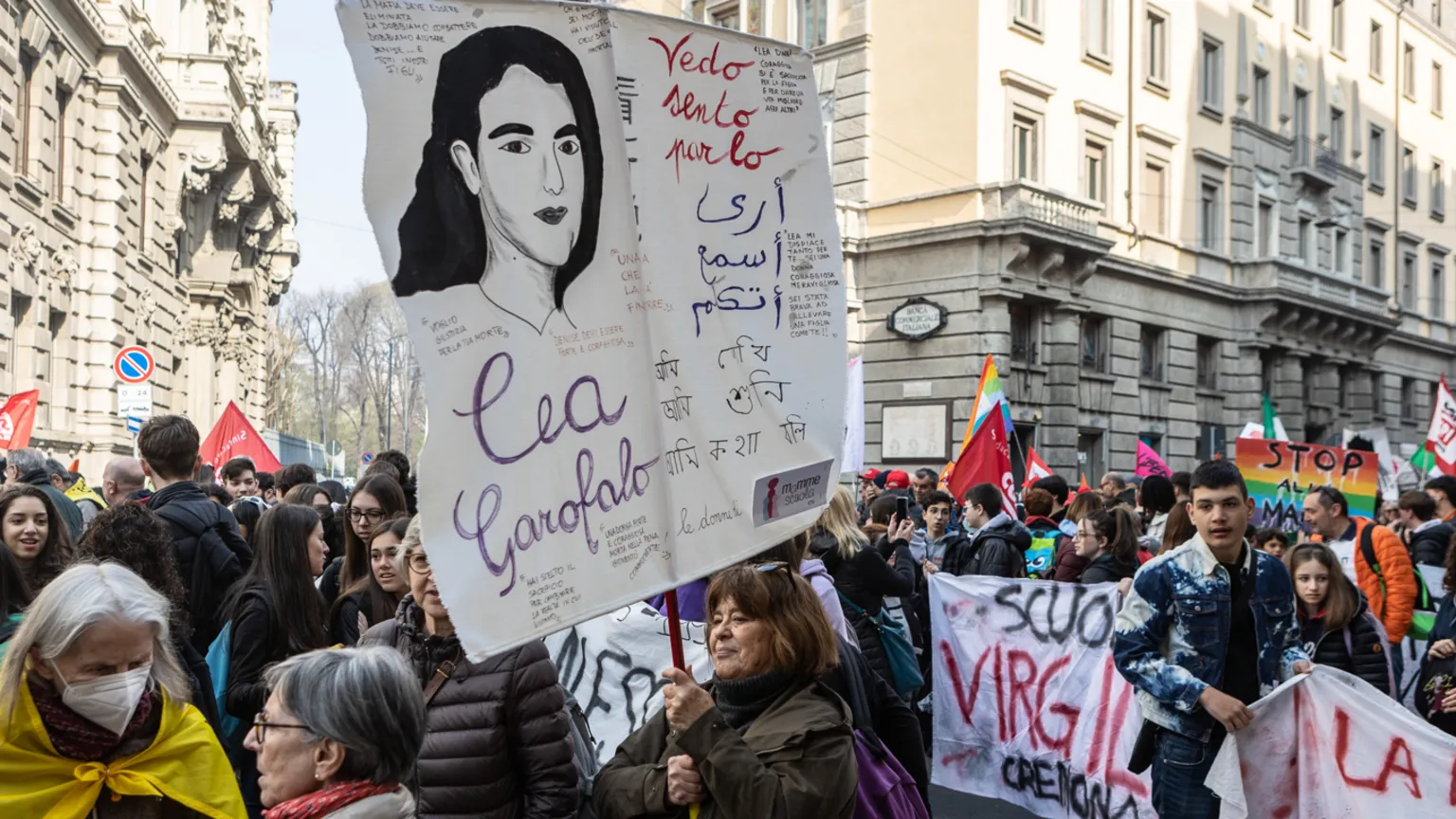
Similar unrest was reported in Milan, Italy, where a demonstration against wars and rising living costs descended into violence, and in Tirana, Albania, where anti-government protests continued for a fifth day.
Although the countries have different political systems, economic conditions and domestic challenges, the demonstrations reveal a common danger: when citizens believe their governments are failing to address their economic suffering, public frustration can escalate into widespread political discontent.
For Nigeria, the developments raise uncomfortable questions about the direction of economic reforms under President Bola Ahmed Tinubu.
They also bring renewed attention to Tinubu's warm diplomatic relationship with French President Emmanuel Macron.
TINUBU AND MACRON: FRIENDSHIP AT THE TOP, HARDSHIP AT THE BOTTOM?
President Tinubu and President Macron have maintained cordial diplomatic relations, with meetings and engagements covering trade, investment, energy, security and other areas of cooperation.
Tinubu has publicly referred to Macron as a friend, and their relationship has attracted attention because both leaders have pursued economic policies that have generated domestic political debate.
Their diplomatic relationship, however, should not be confused with proof that they share identical economic policies or that one president is responsible for the other's country's economic difficulties.
The more important question is whether the economic direction pursued by Nigeria's government is delivering the promised benefits to Nigerians.
The expression "birds of the same feather flock together" is often used to describe people who share similar characteristics or interests.
Applied to Tinubu and Macron, the expression raises a political question rather than establishing a proven economic connection: do their approaches to economic management adequately protect ordinary citizens from the consequences of difficult reforms?
For millions of Nigerians, the answer must be measured not by photographs of presidential meetings, diplomatic compliments or private dinners, but by the price of food in the market, the cost of transportation, the availability of jobs and the purchasing power of household incomes.
A president's international friendships may strengthen diplomatic relations, but they cannot substitute for economic relief at home.
NIGERIA'S ECONOMIC REFORMS: WHO IS PAYING THE PRICE?
Since taking office in May 2023, Tinubu has pursued major economic reforms, including the removal of the longstanding petrol subsidy and changes to the foreign-exchange system.
The administration has defended these measures as necessary to reduce fiscal pressures, improve the functioning of the foreign-exchange market, attract investment and establish a stronger foundation for long-term economic growth.
However, the immediate consequences have been deeply felt by households and businesses.
Higher petrol costs have contributed to increased transportation and operating expenses. Food distribution has become more expensive, while businesses facing higher energy and logistics costs have had to make difficult decisions about prices, staffing and production.
For low-income households, the consequences are especially severe.
When transportation becomes more expensive, workers spend more money getting to their jobs. When food prices rise faster than wages, families are forced to reduce their consumption or abandon other essential expenses.
Parents struggle with school fees, patients face medical bills, and small businesses battle to remain operational.
The central controversy is not simply whether reforms are necessary. It is whether their implementation, sequencing and accompanying social protections are sufficient to prevent ordinary Nigerians from bearing a disproportionate share of the burden.
A reform that promises future prosperity but leaves millions struggling to afford today's necessities must be judged by both its long-term objectives and its immediate human consequences.
FRANCE HAS ECONOMIC PRESSURE. NIGERIA HAS AN AFFORDABILITY CRISIS.
The reported demonstrations in France provide an opportunity to examine the differences between economic hardship in developed economies and the difficulties facing lower-income countries.
France is experiencing public discontent over living costs and public services. Yet its economic circumstances differ substantially from Nigeria's.
France generally has higher average incomes, a more extensive social-protection system and broader access to public services. These mechanisms do not eliminate poverty or hardship, but they can provide some protection against economic shocks.
Nigeria, by contrast, has a large population of informal workers, widespread income insecurity and many households with limited savings or access to social protection.
Consequently, the same increase in the price of a basic necessity can have very different effects.
A household with a relatively stable income and social support may be able to absorb a price increase by reducing discretionary spending.
A Nigerian family already spending most of its income on food, transport and housing may have no comparable option.
For such a family, an increase in the price of rice, garri, cooking gas or public transportation is not merely an inconvenience. It can determine whether the household eats adequately, pays school fees or obtains medical treatment.
That is why comparisons between France and Nigeria must go beyond the fact that both countries are experiencing public dissatisfaction.
The real issue is not which country's citizens complain louder. It is which households have the financial capacity and social protection to survive rising prices.
IF MACRON FACES PROTESTS, WHAT SHOULD TINUBU LEARN?
The French demonstrations should not automatically be interpreted as proof that Macron's economic policies have failed in every respect. Nor do the protests establish that France and Nigeria face identical problems.
Nevertheless, they offer an important lesson for political leaders: economic indicators and official explanations cannot replace the lived experiences of citizens.
Governments may point to fiscal savings, investment commitments, improved revenue collection or economic growth. But citizens will continue to judge economic performance by whether their living conditions are improving.
Tinubu's administration therefore faces several questions.
If the removal of petrol subsidies was intended to free resources for development, how much of the resulting fiscal space has translated into measurable improvements in public services and household welfare?
What proportion of the benefits has reached low-income families?
Are wages, pensions and social assistance keeping pace with increases in the cost of living?
What measurable improvements have occurred in food affordability, healthcare access, education and employment?
And how effectively is the government communicating the costs, benefits and timelines of its economic reforms?
These questions require verifiable figures and transparent answers, not political slogans.
The same standard should apply to Macron's government as it responds to public dissatisfaction in France.
THE TINUBU-MACRON RELATIONSHIP: DIPLOMACY MUST DELIVER RESULTS
Nigeria and France have legitimate reasons to maintain strong diplomatic relations.
France is an important European economic and diplomatic partner, while Nigeria is a major African country with considerable energy, commercial and strategic significance.
Cooperation between the two countries can potentially support investment, technology transfer, trade, education and security.
However, diplomatic engagement should ultimately serve the interests of the people.
For Nigeria, the test of its relationship with France is whether cooperation produces tangible benefits for Nigerian citizens and businesses.
Does it create decent jobs? Does it expand local production? Does it encourage technology transfer? Does it improve access to essential services? Does it strengthen Nigeria's ability to negotiate agreements that advance its own economic interests?
These are more meaningful measures of success than the personal warmth displayed between two presidents.
There is no established evidence in the information presented here that Macron designed Tinubu's domestic economic reforms or that their personal relationship caused Nigeria's current economic difficulties.
Nevertheless, Tinubu's government must remain accountable for its own decisions, regardless of the strength of its international relationships.
A friendly relationship with a foreign president cannot shield domestic economic policies from public scrutiny.
THE DANGER OF IGNORING PUBLIC ANGER
The demonstrations in France, the unrest reported in Italy and the anti-government protests in Albania illustrate the political risks that emerge when economic grievances combine with dissatisfaction over public services or governance.
Nigeria should take these developments seriously without assuming that the country will necessarily experience the same events.
Economic frustration can weaken public confidence, intensify political divisions and increase pressure on governments to change course.
For Nigeria, the consequences of prolonged hardship may include declining consumer spending, struggling small businesses, worsening household debt and increased public distrust.
The government must also recognise that economic growth, where recorded, does not automatically translate into improved living standards for every citizen.
An economy can expand while households continue to struggle if the benefits are unevenly distributed, employment opportunities remain inadequate or essential goods become unaffordable.
That distinction lies at the heart of the public debate surrounding Tinubu's reforms.
NIGERIANS DESERVE ANSWERS, NOT JUST ECONOMIC PROMISES
The relationship between Tinubu and Macron may continue to produce diplomatic engagements, trade discussions and investment announcements.
But for the Nigerian trader, the struggling civil servant, the unemployed graduate, the transport worker and the family searching for an affordable meal, the most important question remains unchanged.
When will economic policies begin to produce meaningful relief?
The government must demonstrate that fiscal reforms are translating into improved purchasing power, affordable food, accessible healthcare, quality education, decent employment and a more secure future for ordinary Nigerians.
If the reforms require temporary sacrifices, the government must explain the expected benefits, publish verifiable evidence of progress and ensure that vulnerable citizens are not abandoned.
It must also acknowledge that the public's patience cannot be sustained indefinitely by promises of future prosperity.
THE BIG QUESTION: BIRDS OF THE SAME FEATHER, OR TWO LEADERS FACING THE SAME PUBLIC TEST?
Tinubu and Macron maintain a cordial relationship, but the economic circumstances of France and Nigeria are not identical, and there is no evidence that their friendship caused the hardship experienced by Nigerians.
What connects the two countries in this moment is the pressure governments face when citizens demand relief from rising living costs.
For Macron, the reported demonstrations present a challenge over household expenses and public services.
For Tinubu, Nigeria's economic reforms face a different but equally important test: whether the promised gains can improve the living conditions of a population in which many households have little financial room to absorb higher prices.
The lesson for Nigeria is straightforward.
A president may enjoy international friendships, announce economic reforms and report progress in official statistics. But none of these achievements can replace affordable food, decent jobs and a dignified standard of living for ordinary citizens.
As France grapples with public anger, Nigerians have every reason to ask their own government difficult questions about economic policy, accountability and the distribution of the costs and benefits of reform.
If Tinubu and Macron are friends at the presidential level, can their governments demonstrate that ordinary citizens are also benefiting from the economic direction they have chosen?
And for Nigeria's leaders, the question is even more urgent:
If the economy is growing, why are so many Nigerians still struggling to afford three square meals a day?






0 Comment(s)